
'Sell in May, go away' is a popular market adage. But 'Don't sell any new shares in May' is the best kept secret of Dalal Street that's set to break. Sample this: the last four General Election election cycles starting 2004 have not seen a single initial public offering (IPO) launch during the month of May.

'Business families like the Godrej group are increasingly realising that an amicable settlement is better.' 'Else, the wealth of all shareholders gets destroyed.'

Market players attribute the rally in small and midcaps to flows from retail investors and domestic institutions.

Maintaining the balance of gut microbiota is important as an imbalance, also known as dysbiosis, can cause or aggravate different diseases, including but not limited to digestive problems such as inflammatory bowel syndrome, mental health issues like anxiety and depression and menstrual problems.

Ahmedabad-based Zydus Lifesciences said on Tuesday that a new drug application for its oral drug Desidustat used in treating anaemia in chronic kidney disease (CKD) patients had been accepted by the National Medical Products Administration of China (NMPA). In 2020, CMS International Development and Management Ltd, a wholly-owned subsidiary of China Medical System Holdings Ltd obtained an exclusive license for the product from Zydus. CKD involves a gradual loss of functioning of kidneys and eventually leads to kidney failure.
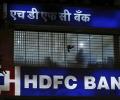
HDFC Bank's latest shareholding data showed that the room for foreign investment has fallen just 5 basis points short of the threshold set by Morgan Stanley Capital International (MSCI) to fully include the stock in its indices. Currently, the index provider has applied an adjustment factor of 0.5 since the foreign room is less than 25 per cent. Removal of the adjustment factor will result in inflows of a massive $4.8 billion (Rs 40,000 crore) into HDFC Bank, according to Brian Freitas, a New Zealand-based analyst with Periscope Analytics.

Consumer goods firms and auto companies are witnessing an upturn in rural demand, which had been lagging for most of FY24. Expectations of a bumper rabi crop harvest have helped turn the tide. The Reserve Bank of India's (RBI's) Monetary Policy Committee kept the repo rate unchanged last week, noting that as rural demand catches up, consumption is expected to support economic growth in 2024-25.

Nearly one in two luxury cars sold in India in the first three months of 2024 was a Mercedes Benz, which achieved its best ever quarter (January-March), selling 5,412 units, up 15 per cent year-on-year (Y-o-Y) from 4,697 units in the previous year.

Eighty per cent, or 60 of the 75 companies that made their debut on the mainboard this financial year, ended their listing day with gains.

The number of dematerialised (demat) accounts - required to hold shares and other securities in electronics format - crossed the 150-million mark for the first time in March. In March, 3.12 million new demat accounts were added despite a spike in market volatility, taking the total count to 151.4 million. The milestone has come 19 months after the total number of demat accounts hit the 100-million mark, a sign that more domestic households are taking to direct equity investing.

Shares of Avenue Supermarts (DMart) have rallied 15 per cent in the past month, even as the benchmark National Stock Exchange Nifty has remained flat. The stock has garnered favourable commentary from both fundamental and technical analysts after three years of poor performance. "DMart has reached its first 52-week high since October 2021, taking off from solid base formations.

The government has been stringent with pricing changes. Prices of 651 essential medicines came down from April 1, 2023 by 6.73 per cent with the government capping ceiling prices of these drugs.

Equity fundraising through initial public offerings (IPOs) rose 20 per cent during the financial year 2023-24 (FY24). During the period, 76 Indian corporates raised Rs 61,915 crore through main board IPOs, compared to Rs 52,116 crore mobilised by 37 IPOs in 2022-23, as disclosed by PRIME Database. However, if one excludes the mega Life Insurance Corporation (LIC) IPO, which came out in 2022-23, IPO mobilisation increased by 58 per cent from last year.

'Every hospital now tracks length of stay closely.' 'More efficiency is brought into the system now.'
The initial public offerings (IPOs) by small and medium enterprises (SMEs) hit a new high in 2023-2024 (FY24). In this financial year, data from the Prime Database showed that 190 companies raised Rs 5,579 crore through the SME IPO route. This financial year's tally bettered the fundraising in the previous financial year when 125 companies raised Rs 2,235 crore.

Bajaj Auto, India's leading two-wheeler (2W) and three-wheeler (3W) maker, is scaling up its wholly owned finance subsidiary, Bajaj Auto Credit Ltd (BACL), with an investment of more than Rs 3,000 crore planned over the next two financial years, company's managing director Rajiv Bajaj said. BACL has already started commercial operations, Bajaj recently said on the sidelines of the group's CSR identity event. According to rating agency CRISIL, BACL's operations began on January 1 after receiving its licence from the Reserve Bank of India (RBI) in August last year.

Battling the virus, enduring separation from loved ones, and working extended hours became part of the job.

Indian pharma companies are focussing on flagship products or mother brands under which they launch various new combinations to ensure robust revenue growth as well as therapy leadership. An analysis by market research firm Pharmarack showed how such flagship brands have posted strong growth CAGR in the last five years, with some even doubling sales. Sheetal Sapale, vice-president, commercial at Pharmarack, said, "Mother brands are analogous to an aggressive player who has put in a lot of effort during the prime years of life but now continues to silently nurture the brand family to collectively cross newer benchmarks of success."

Equity fundraising through initial public offerings (IPOs) rose 20 per cent during the financial year 2023-24 (FY24). During the period, 76 Indian corporates raised Rs 61,915 crore through main board IPOs, compared to Rs 52,116 crore mobilised by 37 IPOs in 2022-23, as disclosed by PRIME Database. However, if one excludes the mega Life Insurance Corporation (LIC) IPO, which came out in 2022-23, IPO mobilisation increased by 58 per cent from last year.

In addition to regulatory actions against small and midcaps, tighter liquidity conditions are another headwind that stocks are facing this month. Market observers say advance tax outflows and capital gains-related adjustments will weigh on the markets in the near term.
 © 2026 Rediff.com - Investor Information - Advertise with us - Disclaimer - Privacy Policy - Sitemap - Feedback - About us - Terms of use - Grievances